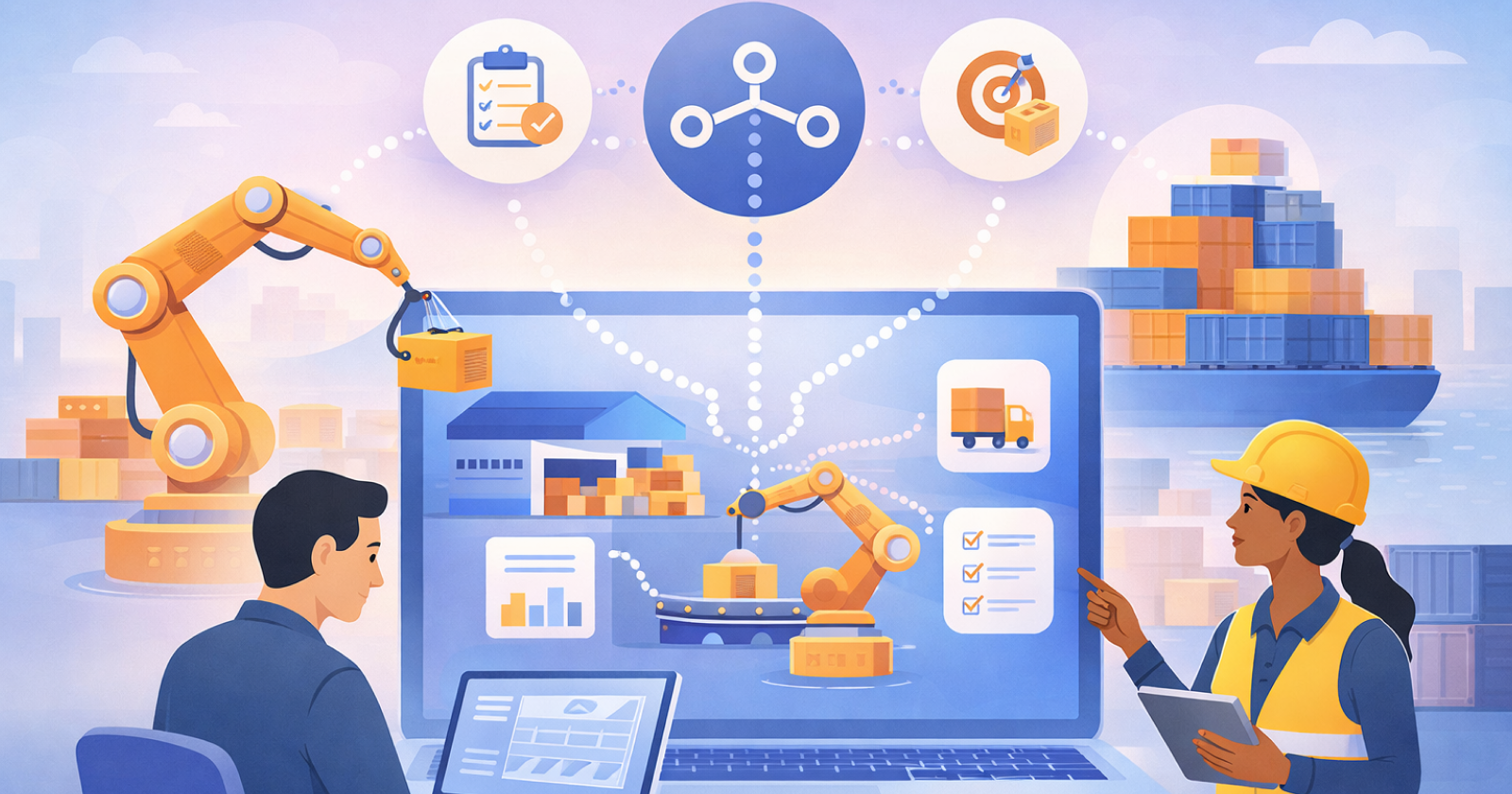
Generative AI for Route Optimization: Reducing Costs and Delivery Times

Global logistics companies are under intensifying pressure to cut costs while meeting increasingly demanding delivery expectations from e‑commerce and enterprise customers. Rising fuel prices, labor shortages, and competitive pressure have pushed last‑mile delivery costs to over half of total shipping expenses, highlighting how traditional planning methods struggle to keep pace with evolving market needs.
In response, many firms are turning to generative AI, a class of artificial intelligence that goes beyond conventional route planning by analyzing vast real‑time datasets—traffic patterns, weather, order urgency, fleet status, and more—to make smarter operational decisions. The generative AI market in logistics, valued at around $1.7 billion in 2025, is projected to grow rapidly through 2035, with year‑over‑year growth above 30% as companies seek scalable, data‑driven solutions.
This shift delivers measurable benefits: AI‑enabled route optimization has been shown to reduce transportation costs and last‑mile delivery times significantly, while predictive analytics enhance inventory management and demand forecasting accuracy. Early adopters report improvements in service levels and responsiveness, with AI systems cutting overall logistics costs by double‑digit percentages and speeding up delivery cycles compared with traditional approaches.
Alongside cost savings and faster deliveries, logistics gen AI contributes to heightened customer satisfaction through real‑time visibility and more reliable estimated delivery times. As logistics evolves toward ever‑higher efficiency standards, these intelligent tools are becoming central to competitive advantage in a crowded global market.
How Generative AI Transforms Route Planning
Generative AI is changing route planning by shifting it from rule-based logic to data-driven decision-making. Instead of relying on fixed routes or historical averages, AI systems continuously analyze large and diverse datasets to build routes that reflect real operating conditions. This approach is especially valuable in logistics environments where delays, disruptions, and demand fluctuations are common.
At the core of this transformation is AI’s ability to process and connect multiple data sources at once. Generative AI models can evaluate information that would be difficult to combine manually, then generate routing options that balance speed, cost, and reliability.
Real-time and historical traffic data to identify congestion patterns and recurring bottlenecks
Weather conditions, including forecasts that affect road safety, speed, and accessibility
Vehicle load, capacity, and weight distribution to ensure compliance and efficiency
Delivery constraints such as time windows, service priorities, and driver availability
Unlike traditional routing tools that calculate a route once and rarely update it, generative AI enables dynamic route planning. Routes are recalculated when conditions change, allowing logistics teams to respond immediately to disruptions rather than react after delays occur.
Continuous route adjustments based on live traffic or weather updates
Scenario simulations that compare multiple delivery paths before execution
What if modeling to test the impact of delays, vehicle breakdowns, or last-minute order changes
Optimized sequencing of stops to reduce empty miles and idle time
These capabilities lead to measurable efficiency gains compared to static routing methods. Traditional approaches often depend on fixed rules and past data, which limits their ability to adapt. Generative AI improves decision quality by learning from outcomes and refining routes over time.
Shorter delivery times through smarter path selection
Lower fuel consumption and operating costs due to reduced detours
Better asset utilization by aligning routes with vehicle and load characteristics
Improved service reliability by proactively avoiding high-risk scenarios
Overall, generative AI turns route planning into a continuous optimization process. Combining deep data analysis with scenario generation allows logistics operations to move from planned routes to adaptive routing strategies that better match real-world conditions.
Key Factors AI Considers for Optimal Routes
AI-based route optimization relies on a multi-dimensional analysis of operational, environmental, and business data. Instead of selecting routes based on a single priority such as distance, AI systems evaluate a combination of factors that together define what “optimal” truly means for a specific delivery scenario. This allows routes to be aligned not only with speed but also with cost efficiency, reliability, and service quality.
Traffic patterns and congestion predictions are among the most influential inputs. AI models analyze both real-time traffic feeds and historical movement data to understand where and when delays are likely to occur. By identifying recurring congestion zones and peak-hour slowdowns, AI can proactively redirect vehicles before problems arise, improving delivery consistency and reducing idle time.
Real-time traffic monitoring for immediate rerouting decisions
Historical congestion data to predict future delays
Accident and road closure data for risk avoidance
Peak hour and seasonal traffic trend analysis
Weather conditions are another critical variable that directly affects route reliability and safety. AI systems integrate forecasts and live weather updates to adjust routes and schedules in advance, reducing the risk of late deliveries and operational disruptions.
Weather forecasts for storms, snow, heatwaves, and flooding
Road condition impact analysis on speed and safety
Schedule adjustments based on weather severity
Risk scoring for routes exposed to extreme conditions
Vehicle load, capacity, and delivery priorities shape how routes are structured. AI ensures that routing decisions reflect operational constraints, service commitments, and business goals rather than treating all deliveries equally.
Load weight and volume distribution across vehicles
Vehicle capacity limits and regulatory compliance
Priority-based delivery sequencing for urgent shipments
Matching vehicle type to route and cargo requirements
Cost versus time trade-offs are continuously evaluated to balance efficiency with service expectations. Instead of always choosing the fastest route, AI calculates the overall operational impact of each option, supporting smarter business decisions.
Fuel consumption and toll cost estimation
Labor cost impact of longer routes
Time-sensitive delivery penalties and service level targets
Profitability modeling for alternative route options
By combining these factors into a single decision framework, AI delivers routes that are not only faster but also more economical, resilient, and aligned with business priorities.
Real-World Applications and Benefits
In real logistics environments, AI-driven route optimization is already delivering tangible results across transportation and delivery operations. Companies managing large fleets use AI to replace static routing plans with adaptive models that respond to real-world conditions, helping them control costs while meeting tighter service expectations.
One common application is fuel and labor cost reduction. By continuously optimizing routes based on traffic, load, and delivery priority, AI minimizes unnecessary mileage and idle time. Organizations applying AI-based routing report noticeable efficiency improvements compared to manual planning.
Reduced fuel consumption through shorter and less congested routes
Fewer delivery delays caused by proactive rerouting
Lower overtime hours due to more accurate arrival time predictions
Better fleet utilization with balanced workloads across vehicles
Beyond cost savings, AI significantly improves operational planning and reliability. Dispatchers gain clearer visibility into potential risks before routes are executed, allowing them to adjust schedules and resources in advance rather than reacting to problems after they occur.
More accurate delivery time estimates for customers
Improved compliance with service level agreements
Lower risk of late or missed deliveries during peak demand periods
Stronger coordination between planning, dispatch, and execution teams
Technology providers play a key role in translating these capabilities into practical solutions. COAX Software brings hands-on expertise in implementing AI-driven logistics systems, helping businesses integrate advanced route optimization into their existing workflows. By combining domain knowledge with scalable AI technologies, COAX enables logistics operators to move from reactive routing to data-driven, predictive planning that supports long-term operational efficiency.
Smarter Routes, Lower Costs, Faster Deliveries
Generative AI is redefining how logistics companies plan and execute deliveries, turning route management into a proactive, data-driven process. By analyzing traffic patterns, weather conditions, vehicle capacity, and delivery priorities, AI enables smarter decision-making that reduces costs, minimizes delays, and improves overall operational efficiency.
The competitive advantage of AI-powered route optimization is clear. Companies that leverage these technologies can respond faster to disruptions, optimize resource use, and deliver consistently reliable service, setting themselves apart in an increasingly time-sensitive and cost-conscious market.
For logistics operators aiming to stay ahead, exploring AI solutions is no longer optional. Implementing generative AI for route planning offers measurable improvements in delivery performance, cost savings, and customer satisfaction, transforming traditional fleet management into a strategic, technology-driven advantage.